Let’s find something useful.
A question, an ingredient, or just a little inspiration for dinner.
160 notes on the table
No note quite matches that.
Try a single ingredient, or choose a different chapter.
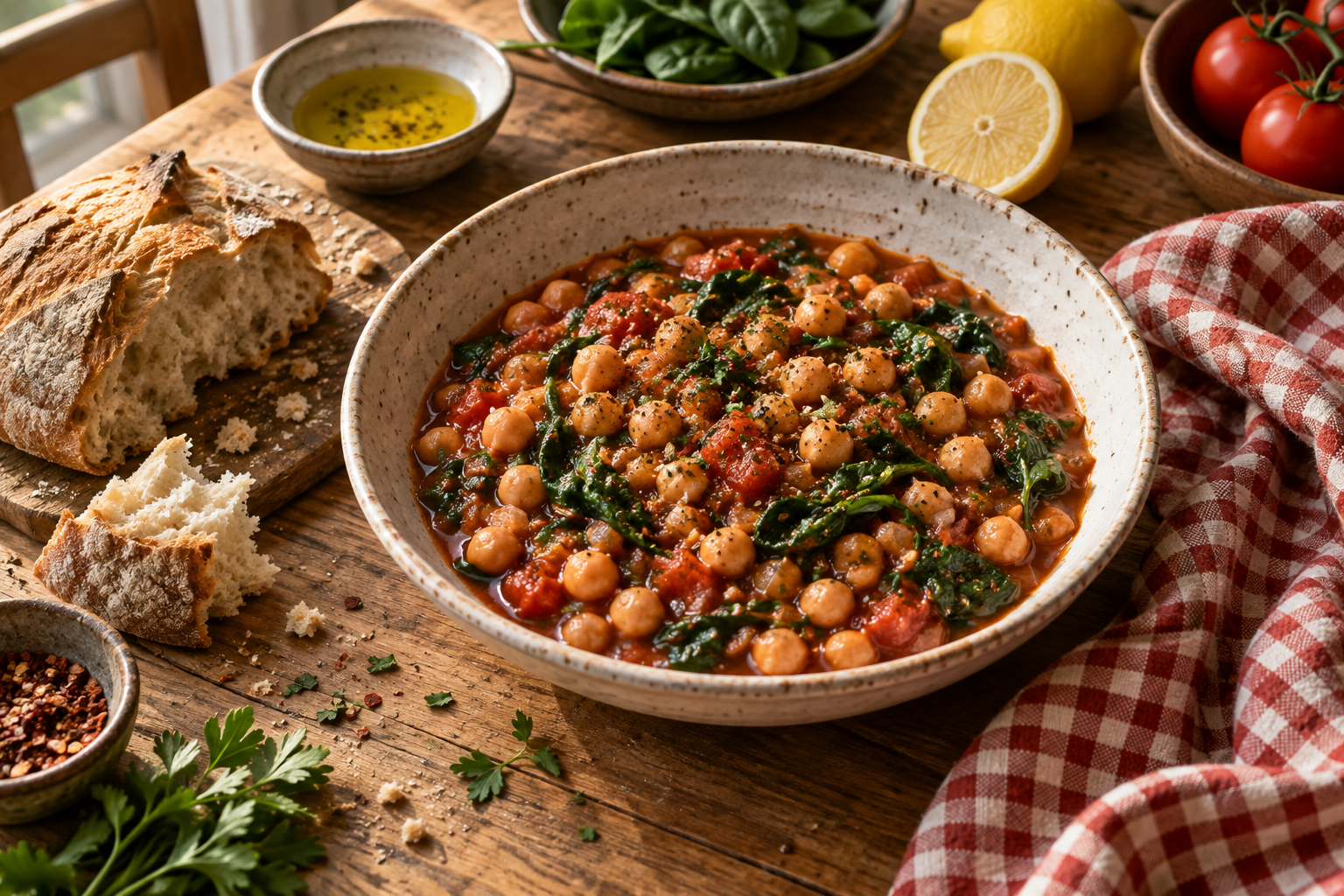
Tomato chickpeas, with bread for the sauce
A small pan, a tin of chickpeas, and something good to mop up the edges.
White beans on thick toast
Keep some beans whole and mash the rest into a soft, lemony topping.
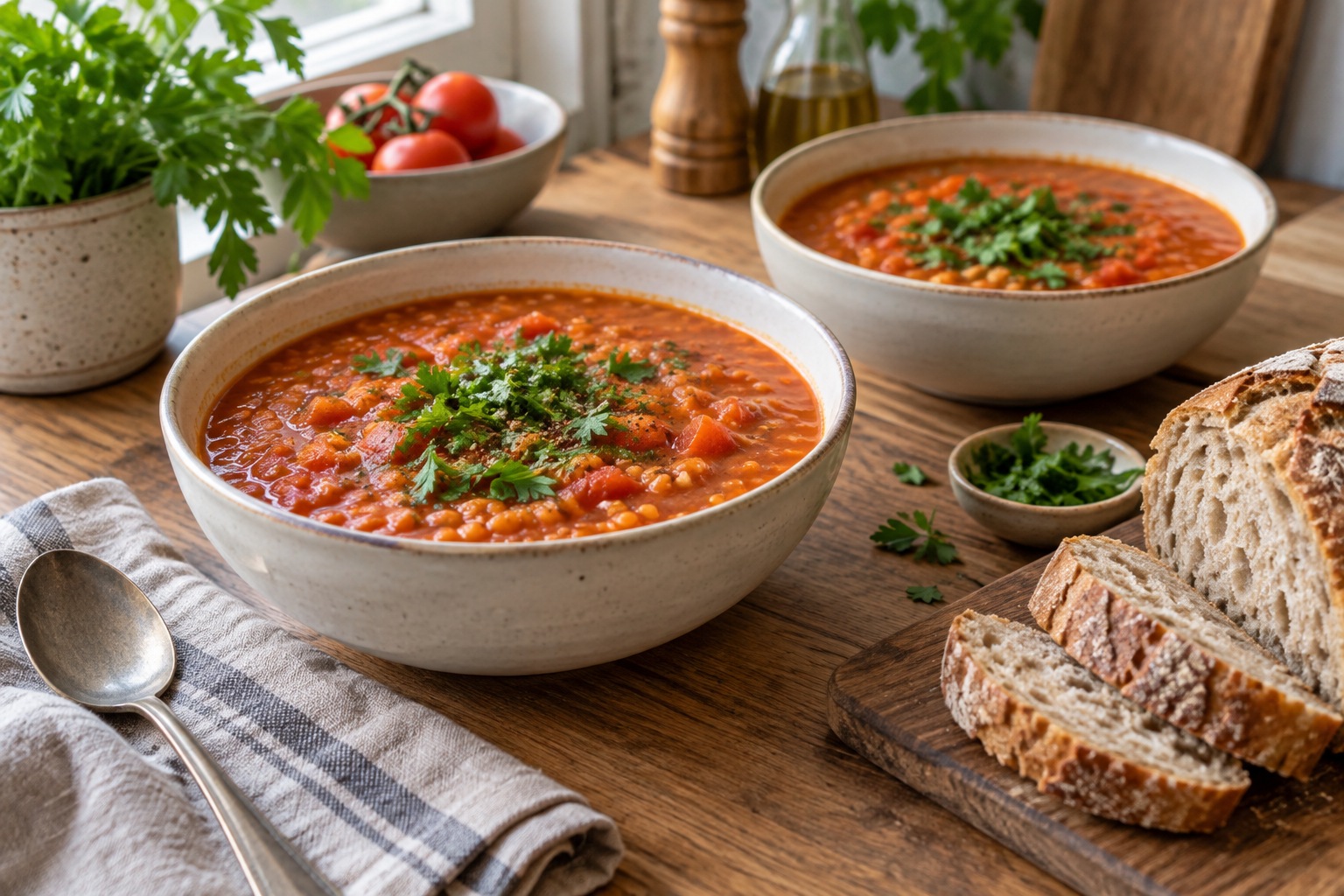
A red lentil soup that thickens in the bowl
Leave this soup a little looser in the pan than you want it at the table.
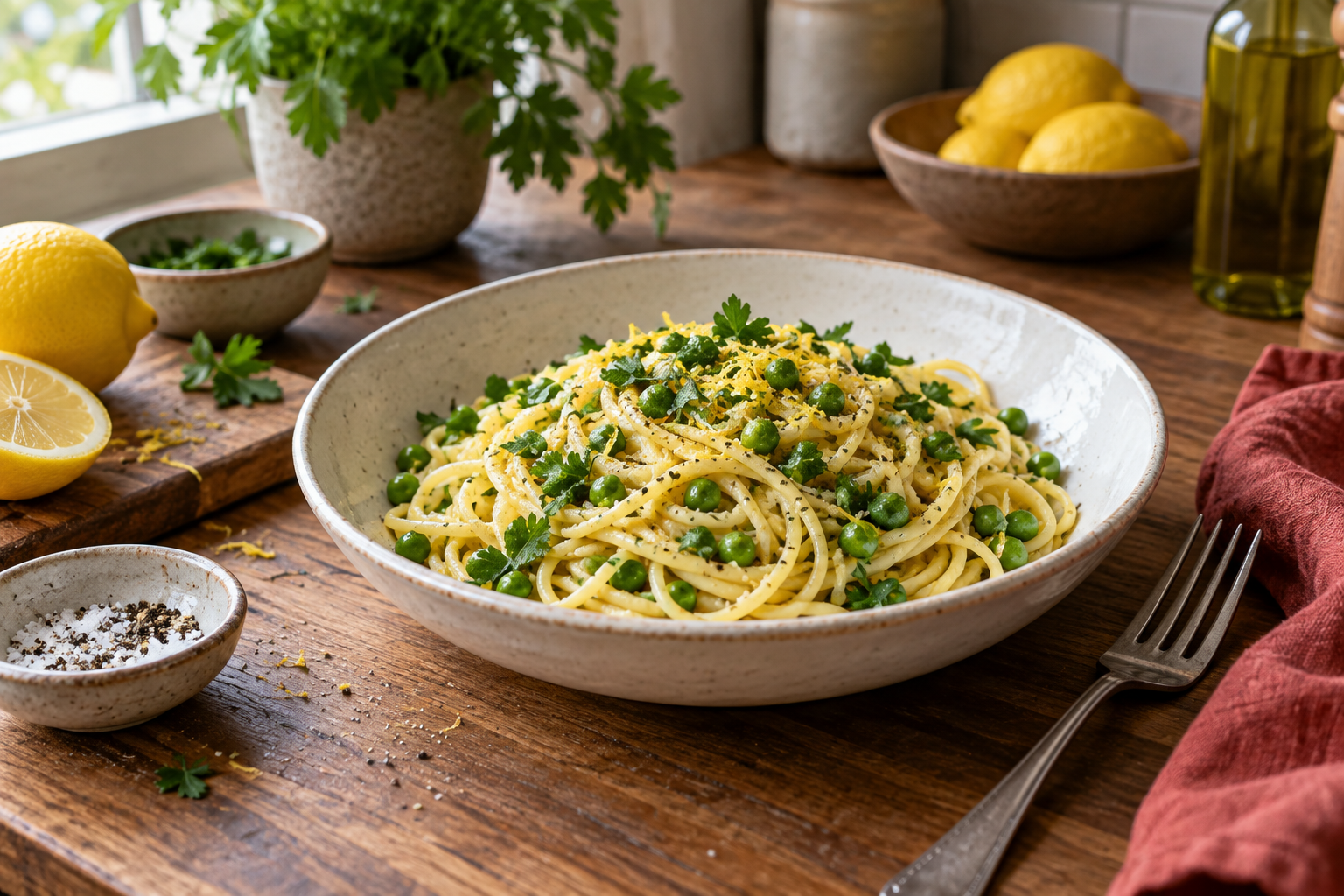
Lemon pasta without a heavy sauce
Starchy cooking water helps oil, lemon, and pasta come together.
Mushrooms deserve their own turn in the pan
Brown the mushrooms before adding the creamy part.
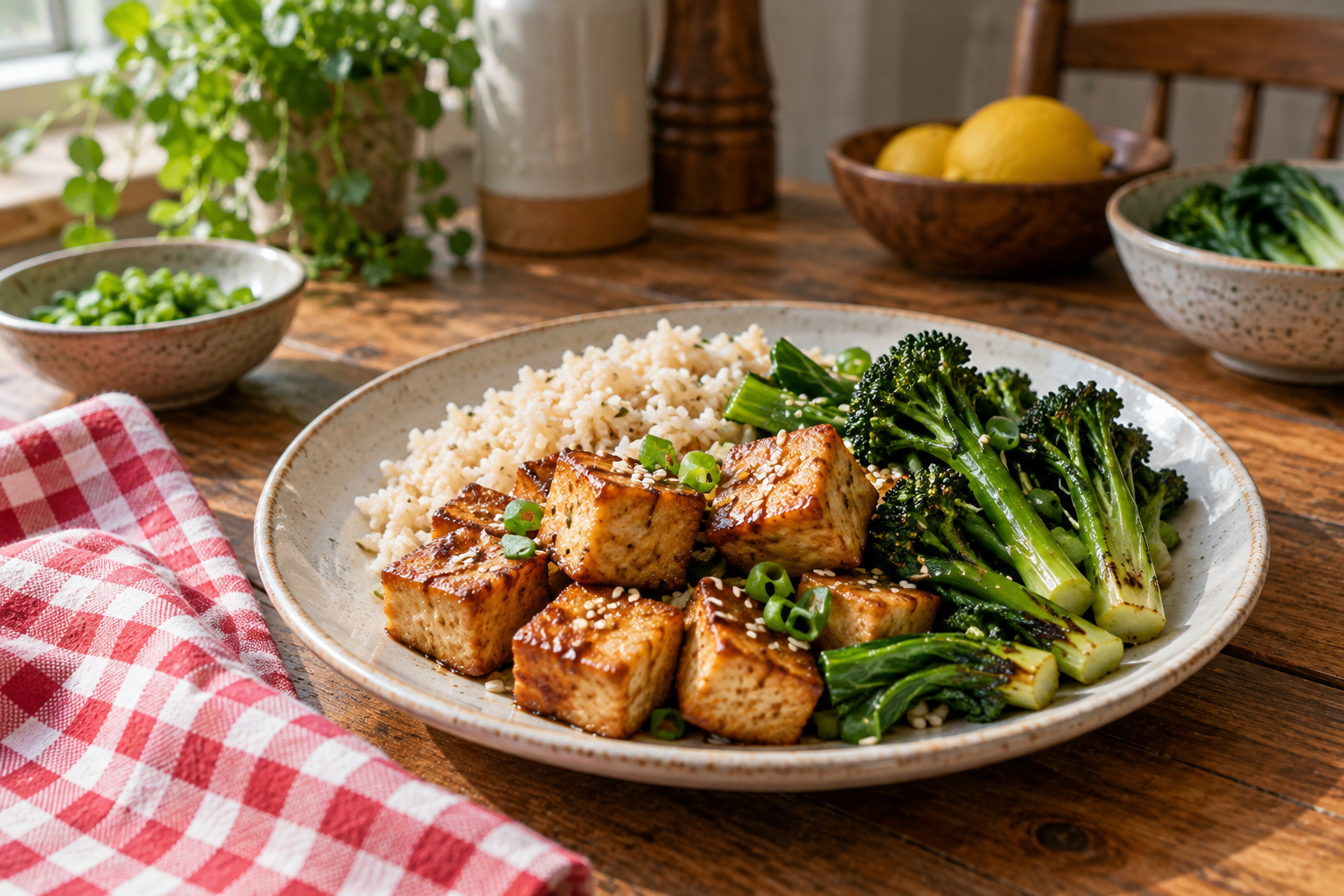
Tofu with crisp edges and a late sauce
Give the surface a chance to brown before bringing in the glaze.
Peanut noodles that stay loose
Thin the dressing more than you think before mixing it with noodles.
A baked potato with more than one topping
Warm beans, a sharp dressing, and a little crunch make a potato feel complete.
Roasted carrots and lentils on one platter
The lentils catch the dressing; the carrots bring sweetness and browned edges.
Broccoli pasta with a rough green sauce
Save the small florets for texture and mash the softer pieces into the pasta.
Black bean quesadillas, held together by the filling
Mash the beans well enough to keep the fold from spilling.
The cabbage-and-noodle supper
Let some cabbage color while the rest softens into the noodles.
Butter beans in a tomato skillet
Large beans need gentle stirring, especially once the sauce thickens.
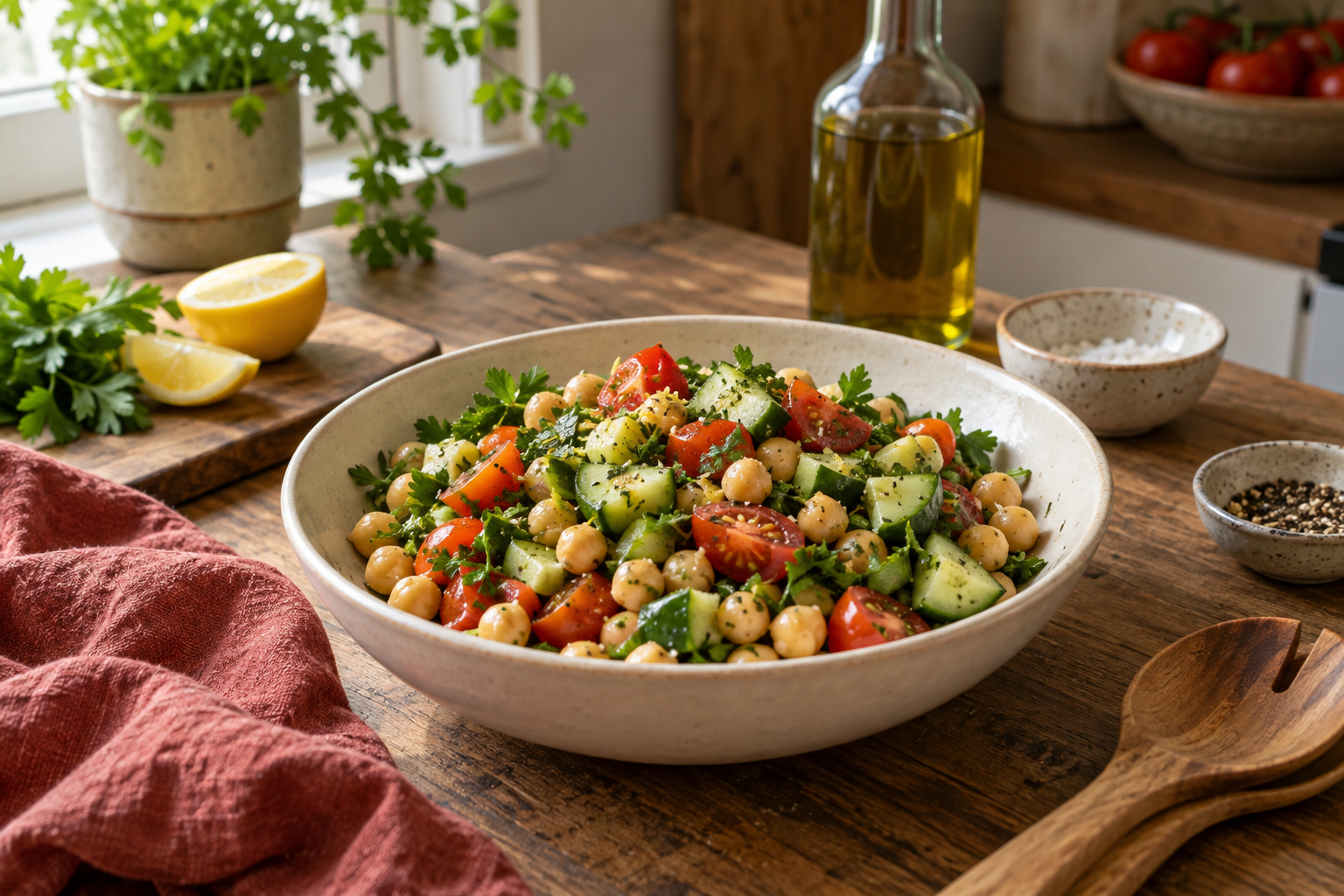
A cucumber chickpea lunch
Dress the beans first and add the cucumber close to eating.
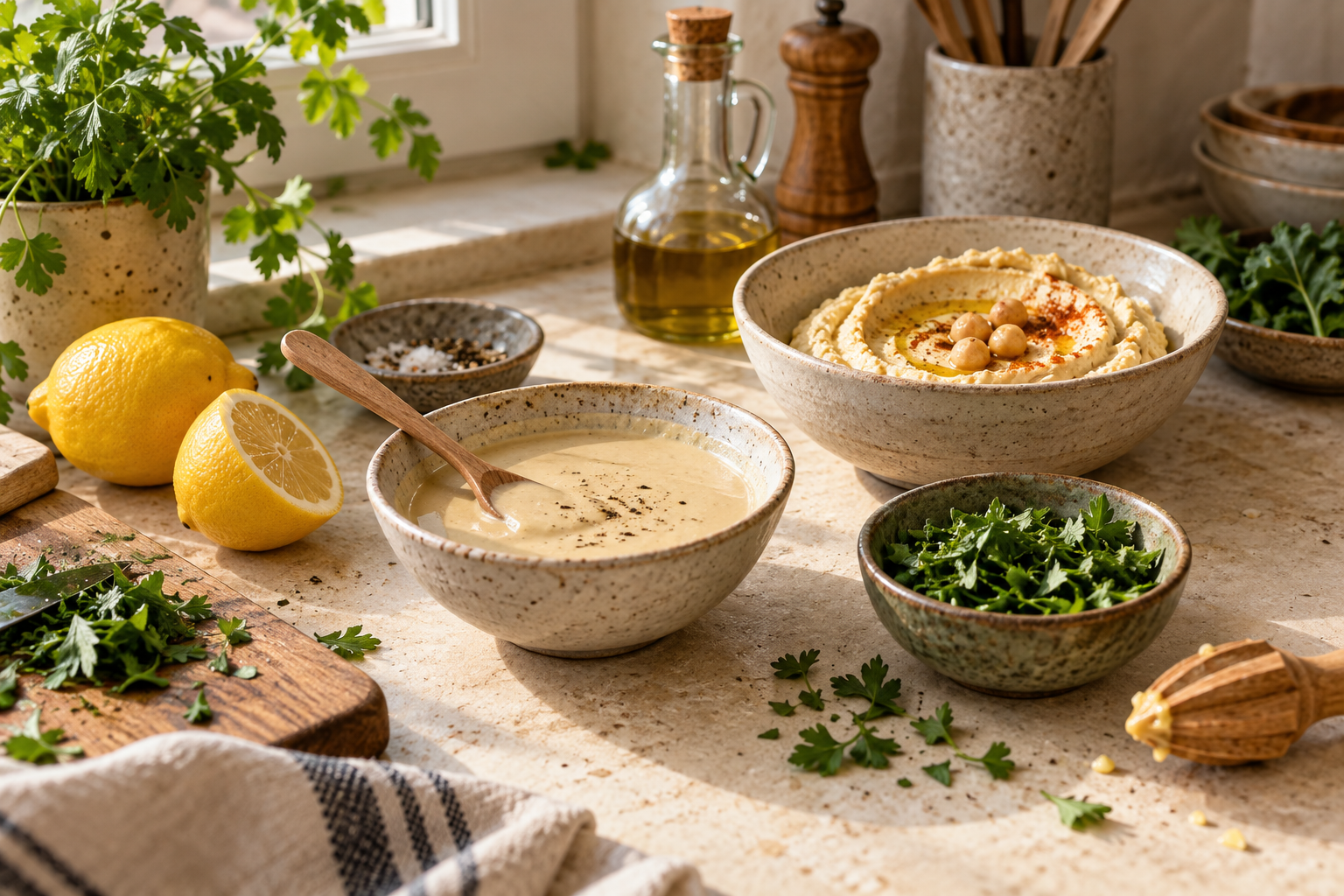
Sweet potato with tahini and a sharp finish
A little acidity keeps a soft, sweet meal from becoming heavy.
Tomato rice with peas
Use a lid that fits and the rice packet's liquid guidance as your starting point.
Lentils with mushrooms and mashed potato
Keep the lentil mixture spoonable so it settles into the mash.
Couscous with warm vegetables
Prepare the grain according to its packet, then bring in a generous dressing.
Green peas on toast, with mint
Crush the peas roughly so the topping still has texture.
A warm white bean and rosemary bowl
Mash a few beans into the broth and leave the rest intact.
Roasted cauliflower wraps
Cut the florets small enough to fit inside a folded wrap.
Spinach beans in a creamy pan sauce
Choose unsweetened cooking cream and add the greens at the end.
A bowl of noodles in ginger broth
Build the broth before adding noodles so they do not overcook while you adjust it.
Carrot ribbons and chickpeas in a warm pan
Thin ribbons cook quickly, but keep them broad enough to retain a little bite.
The useful bowl of savory oats
Treat oats as a grain base and season the toppings as well as the porridge.
Tomato soup with white beans blended in
Beans add body without a carton of cream.
Lentil taco filling with texture
Cooked lentils need a little moisture and some larger pieces left intact.
Potato and green bean salad, served warm
Dress the potatoes while they are still warm enough to absorb flavor.
A soft scramble made from tofu
A splash of liquid helps the curds stay tender.
Creamy polenta with tomato beans
Follow the polenta packet, then keep the topping ready before the base thickens.
A rice bowl built from separate leftovers
Reheat the parts properly, then add fresh toppings at the table.
Peppers filled with couscous and beans
Soften the peppers first so the filling does not dry while they catch up.
A quick tomato sauce for gnocchi
Check the packet for eggs or dairy before building a vegan meal around it.
An aubergine and tomato pan for patient evenings
Let the aubergine become properly tender before calling dinner ready.
A crunchy slaw wrap with hummus
Drain watery vegetables and resist the urge to overfill.
Pasta with peas and a spoonful of hummus
Loosen the hummus off the heat so the sauce stays smooth.
A small tray of potatoes, peppers, and chickpeas
Give the potatoes a head start and add cooked chickpeas later.
A bowl of smashed chickpeas for sandwiches
Leave enough texture to recognize the beans, but not so much that they roll away.
Roasted tomato and bean bowls
Let the tomatoes make their own dressing on the tray.
A dinner assembled from soup and toast
Give the toast its own topping so the meal offers more than one texture.
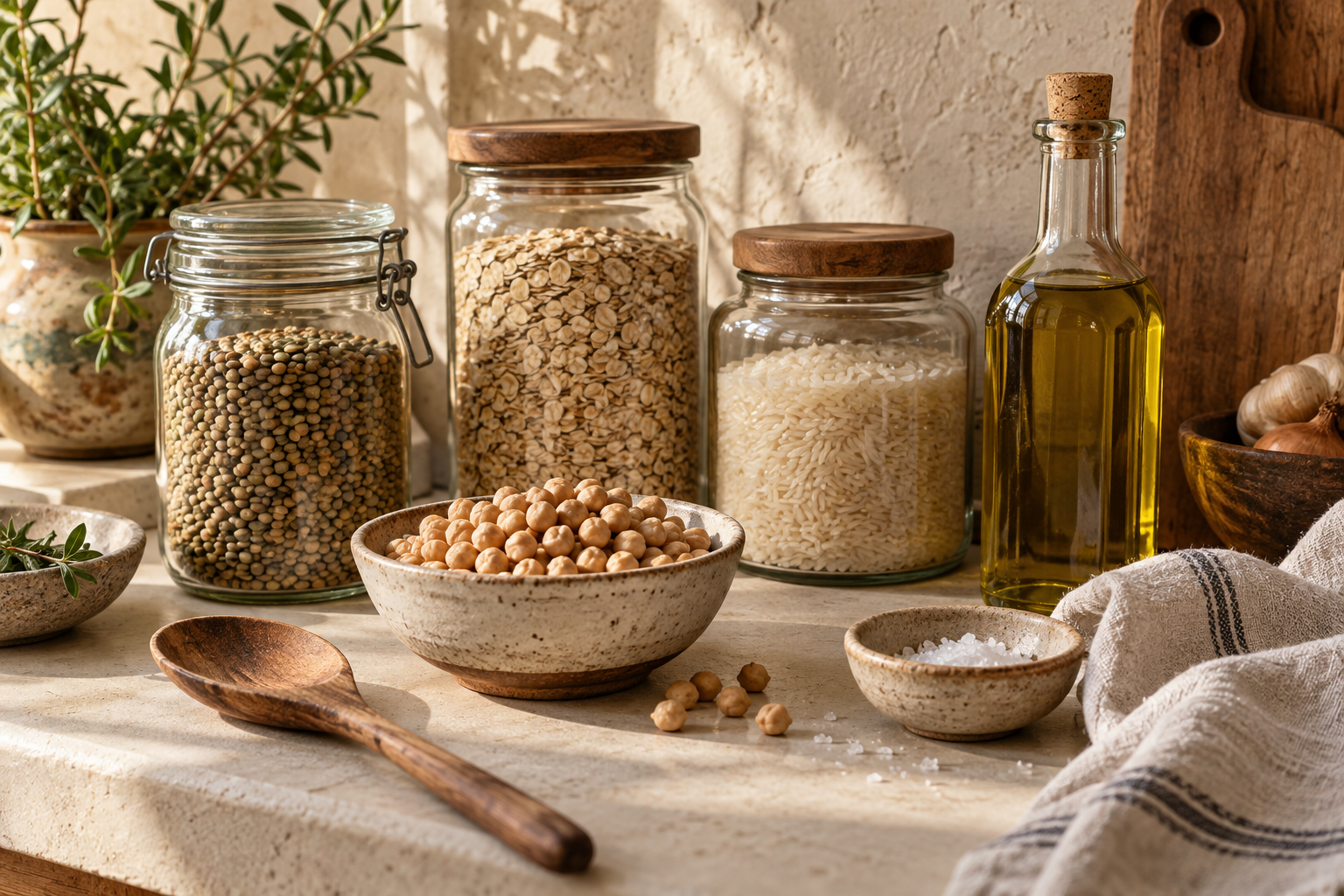
The tin of chickpeas with two useful parts
Drain the beans deliberately instead of automatically tipping everything down the sink.
Red lentils and brown lentils have different jobs
Decide whether you want a soft soup or distinct little lentils.
A small pantry beats an ambitious one
Buy ingredients you can name a meal for.
Firm tofu and silken tofu are not the same shortcut
Pick the texture before planning the cooking method.
Why tahini separates in the jar
Stir from the bottom before measuring a spoonful.
Choose plant milk for the job in front of it
A good drink and a good savory cooking ingredient are not always the same carton.
Nutritional yeast is a seasoning, not a requirement
Use it where you enjoy its savory flavor, and check the label for anything else.
Tomato paste needs a place after opening
Portion the remainder while you still remember what it is.
Coconut milk: read the name and the fat content
A drinking carton and a cooking tin may produce very different sauces.
Keep one useful vinegar within reach
Learn its strength before collecting more bottles.
Frozen peas earn their shelf space
Take only what you need and keep the rest frozen.
The dried herb you actually finish
Store a modest amount away from steam and bright light.
Paprika can be sweet, hot, or smoky
The word on the front of the jar is only the beginning.
Oats: rolled, quick, and steel-cut
Similar ingredients can need very different amounts of time in the pan.
Brown rice and white rice need separate instructions
Keep the cooking directions when decanting into a jar.
Canned beans are a practical starting point
Convenience leaves more room to learn seasoning and texture.
Dried beans deserve their own plan
Learn the method for the particular bean before choosing an appliance.
Store nuts for the way you use them
A small working jar and a colder reserve can make sense.
A jar of mustard does more than dress a sandwich
Start with a little in dressings and bean dishes.
Buy bread with tomorrow in mind
Freeze the portion you are unlikely to finish while it is still in good condition.
Keep the lemon zest before the juice
Zest first, while the fruit is still easy to hold.
Sesame oil is often a finishing ingredient
A few drops of toasted oil can change the whole bowl.
Soy sauce is seasoning with a salt budget
Taste the stock and sauce together before reaching for the salt.
Frozen spinach is a different ingredient from fresh leaves
Account for the water before adding it to a filling.
Choose plain yogurt before choosing a brand
Sweetness and flavorings matter more than the picture on the tub.
A can of tomatoes is not always the same sauce
Whole, chopped, and crushed tomatoes bring different textures to dinner.
Buying spices without building a museum
Start with the seasonings that appear in meals you already want to cook.
Keep labels when you decant ingredients
The name is useful; the cooking and allergen information can be essential.
The freezer needs portions, not just containers
Freeze an amount you can use without thawing the whole batch.
Keep a small “use next” space
Visibility often solves more waste than another ambitious recipe plan.
Best-before and use-by wording depends on where you live
Read the product's storage directions and local guidance together.
Keep a stock you would be willing to sip
Strong stock can dominate a small, simple dish.
A shopping list that leaves room for dinner
Choose a few meals, then buy ingredients that can move between them.
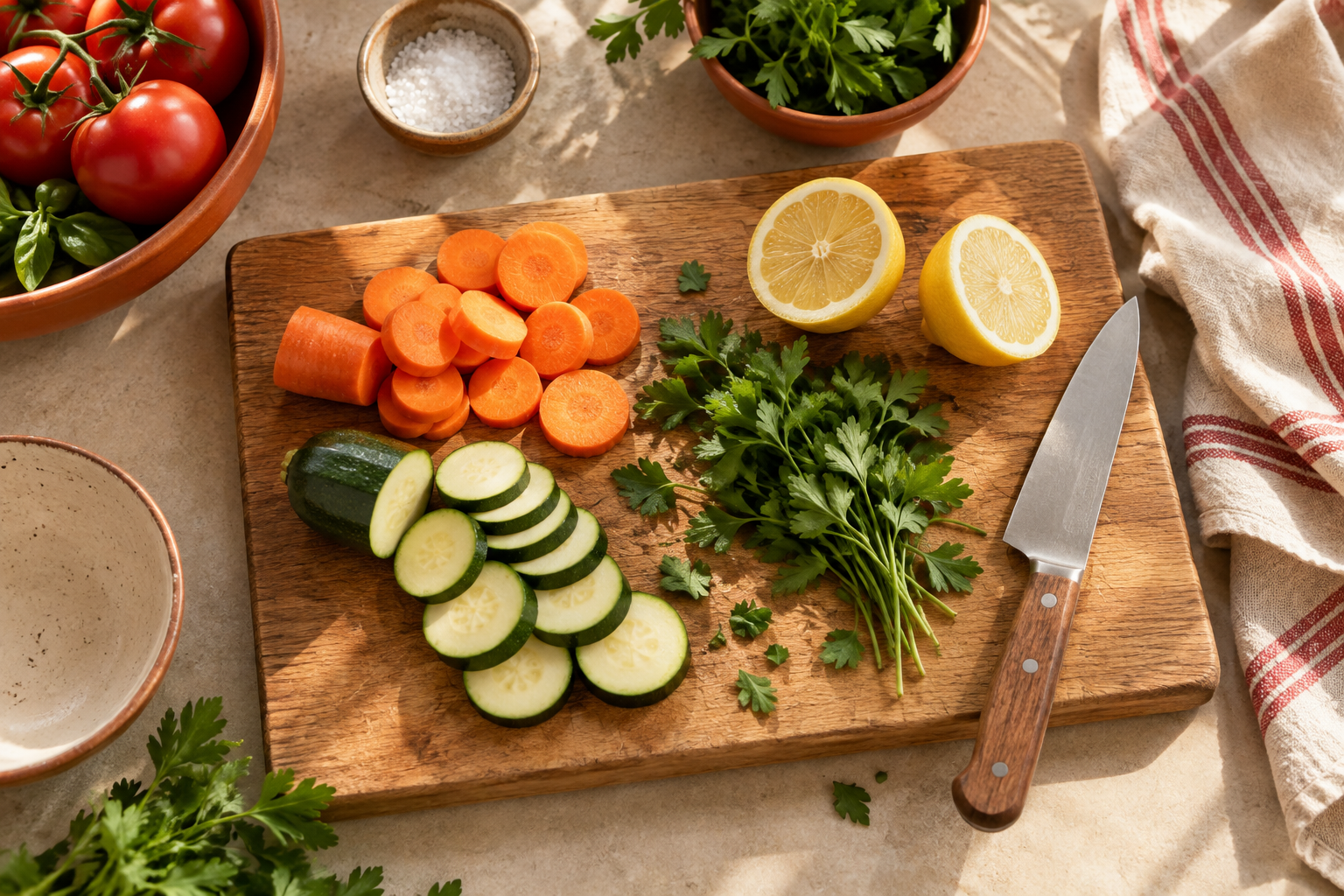
Stop moving the mushrooms for a moment
A little contact with the pan is what creates the browned surface.
A dry tofu surface makes a difference
Remove surface moisture before reaching for more starch or oil.
Why your tahini dressing suddenly turns thick
Keep adding water gradually; the first thick stage is not necessarily a failure.
Taste one spoonful before changing the whole pot
A separate sample lets you test an idea without committing dinner to it.
Cut for cooking time, not perfect appearance
Similar thickness matters more than identical shapes.
Build a sauce around the pasta water
Save it before draining, then add it by the spoonful.
Let garlic arrive after the slower vegetables
Small pieces can burn while onions are still trying to soften.
Roast with space between the pieces
A second tray can be more useful than a higher oven setting.
A dressing should be tasted with its food
A sharp spoonful may be right once it meets beans or potatoes.
Make a smooth bean spread without drowning it
Add liquid in small amounts and scrape the sides between blends.
How to keep a wrap from becoming wet bread
Separate juicy additions until you are ready to eat.
A little crunch can finish a soft meal
Toast a small amount and add it at the table.
Use the whole herb bunch thoughtfully
Tender stems and woody stems belong in different places.
Loosen a thick soup before judging the seasoning
Texture changes how concentrated the flavor seems.
Toast seeds while watching the pan
Small ingredients can move from pale to burnt surprisingly quickly.
Cut a stable base before chopping
A vegetable that does not roll is easier to control.
A blender does not need to make every soup
Blend a portion if you want body while keeping some pieces.
Add delicate greens near the end
A handful of leaves often needs less cooking than the beans beneath it.
Finish with zest when you do not want more liquid
Citrus aroma and citrus sharpness are separate tools.
A pan sauce should not become a lake
Reduce before adding ingredients that are already cooked.
Brown the tomato paste briefly
Give it a little heat before diluting it into the sauce.
Keep raw onion from taking over a salad
Use less, cut it finely, and taste the finished mouthful.
Pack salad dressing separately when texture matters
Leaves and crisp vegetables can wait more comfortably without the sauce.
A baking scale is useful for savory food too
It helps you understand portions and repeat a result you liked.
Let hot food cool safely, not indefinitely
Smaller containers help you put food away promptly.
Rice needs a prompt move to cold storage
Plan for the leftovers before you cook a large batch.
A clean spoon is a useful habit
Taste freely while cooking without returning a used spoon to shared food.
The useful pause before plating
Check temperature, texture, and the first mouthful together.
Keep a note of the change that mattered
Record the adjustment you want to remember, not a transcript of the evening.
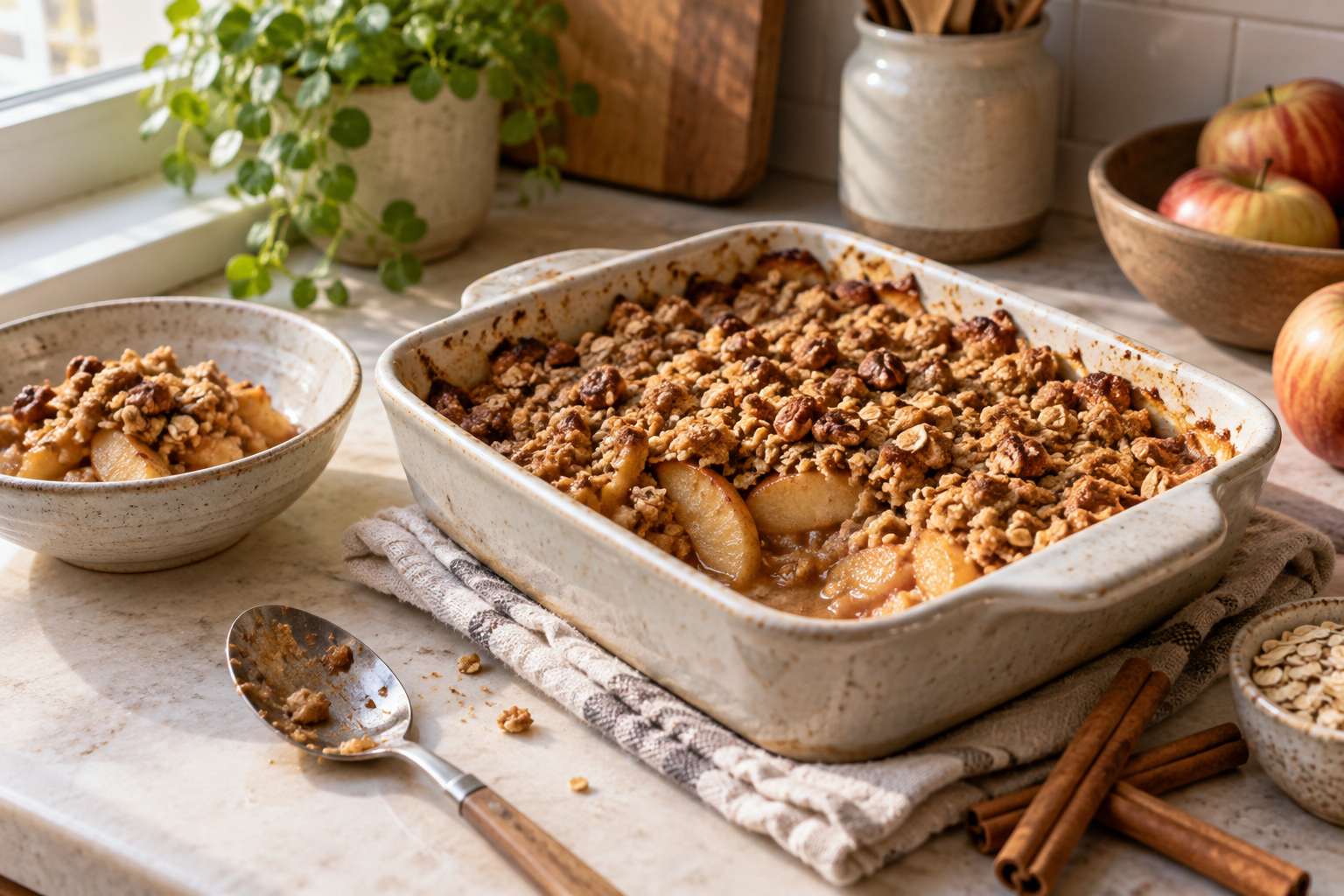
An apple crumble for a small dish
Keep the fruit layer shallow enough to soften before the topping becomes dark.
Baked pears with a little maple syrup
Choose pears with enough firmness to survive the oven.
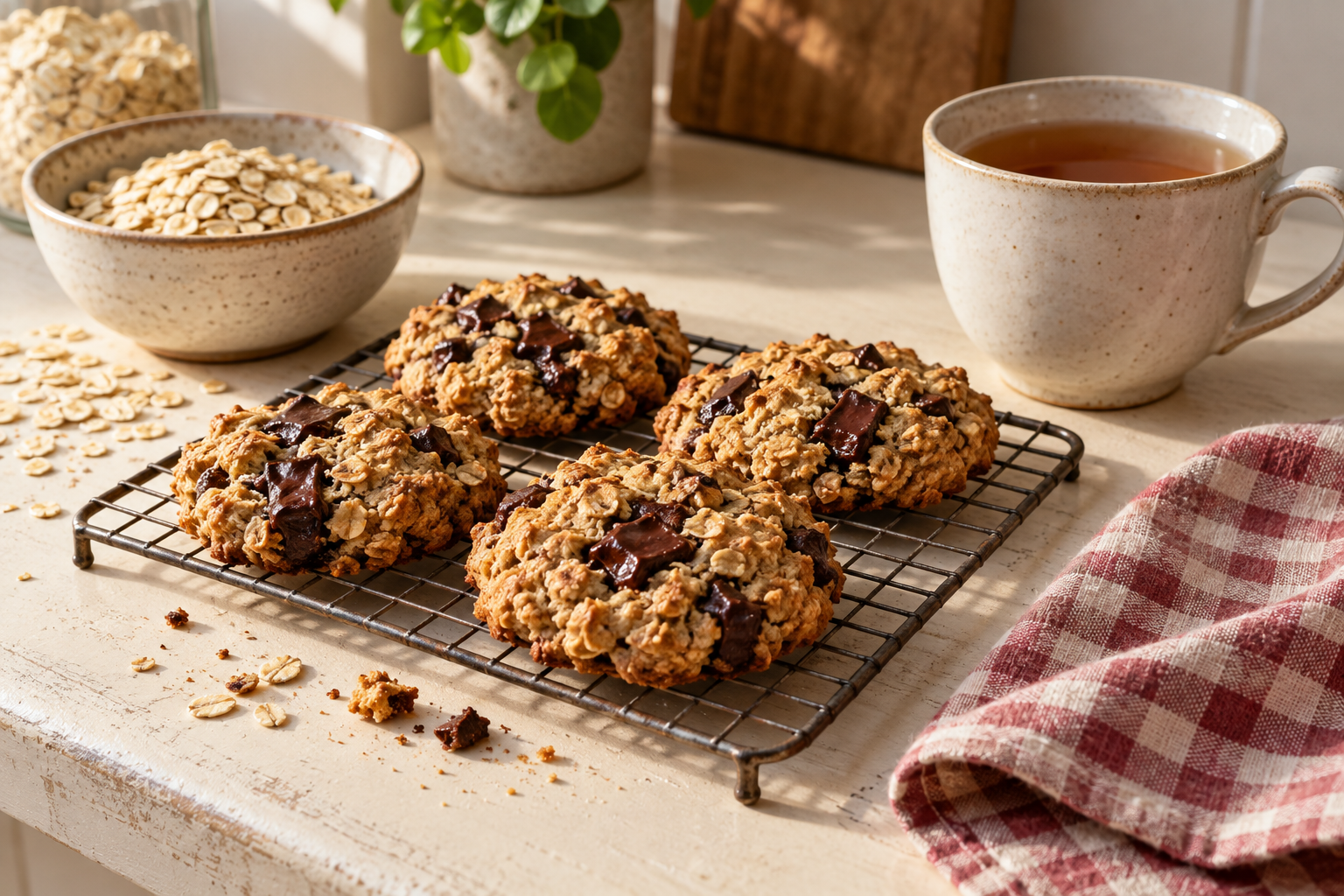
A flax mixture is not a universal egg replacement
Match the substitute to what the egg was doing in the original recipe.
Why oil and vegan butter do not always swap neatly
Fat content, water, and temperature affect the result.
Weigh flour without packing it into the cup
A little extra flour can change a small batch noticeably.
Let a loaf cool before judging the crumb
A warm slice can look gummy even when patience would improve it.
Baking powder and baking soda have different roles
Read the recipe carefully before reaching for the familiar-looking tub.
Dark chocolate still needs an ingredient check
A high cocoa percentage does not automatically exclude milk.
A simple chocolate dip for fruit
Melt gently and keep water out of the chocolate itself.
Warm cinnamon apples for breakfast or dessert
Add water a little at a time and keep some pieces intact.
Choose a baking pan before mixing the batter
A wider pan changes depth, cooking time, and the balance between crust and center.
A fruit dessert can be mostly fruit
Use one contrasting element instead of a long list of toppings.
Raw vegan cookie dough is still raw dough
Removing eggs does not make ordinary flour ready to eat.
Coconut flavor does not disappear in every cake
Choose it when the flavor belongs in the dessert.
Stop mixing when the batter is combined
A smooth-looking batter is not always the goal.
A cookie can set as it cools
Follow the recipe before moving a soft batch straight off the tray.
Applesauce changes more than moisture
It can be useful, but it does not reproduce every job of fat or eggs.
Keep the first pancake small
Use it to learn the pan temperature before cooking the whole batch.
Serve crumble with something cool
A plain, cool accompaniment can balance a warm, sweet spoonful.
Sugar does more than make a bake sweet
Large reductions can change texture, spread, and browning.
A small dessert plate needs less assembly
Choose something you can finish while dinner rests.
Read the whole baking method before starting
Chilling, cooling, and resting can matter as much as oven time.
One change at a time makes baking easier to learn
Keep enough of the original method to understand the result.
A baking day can end with a clean counter
Wash the awkward tools before the mixture dries onto them.
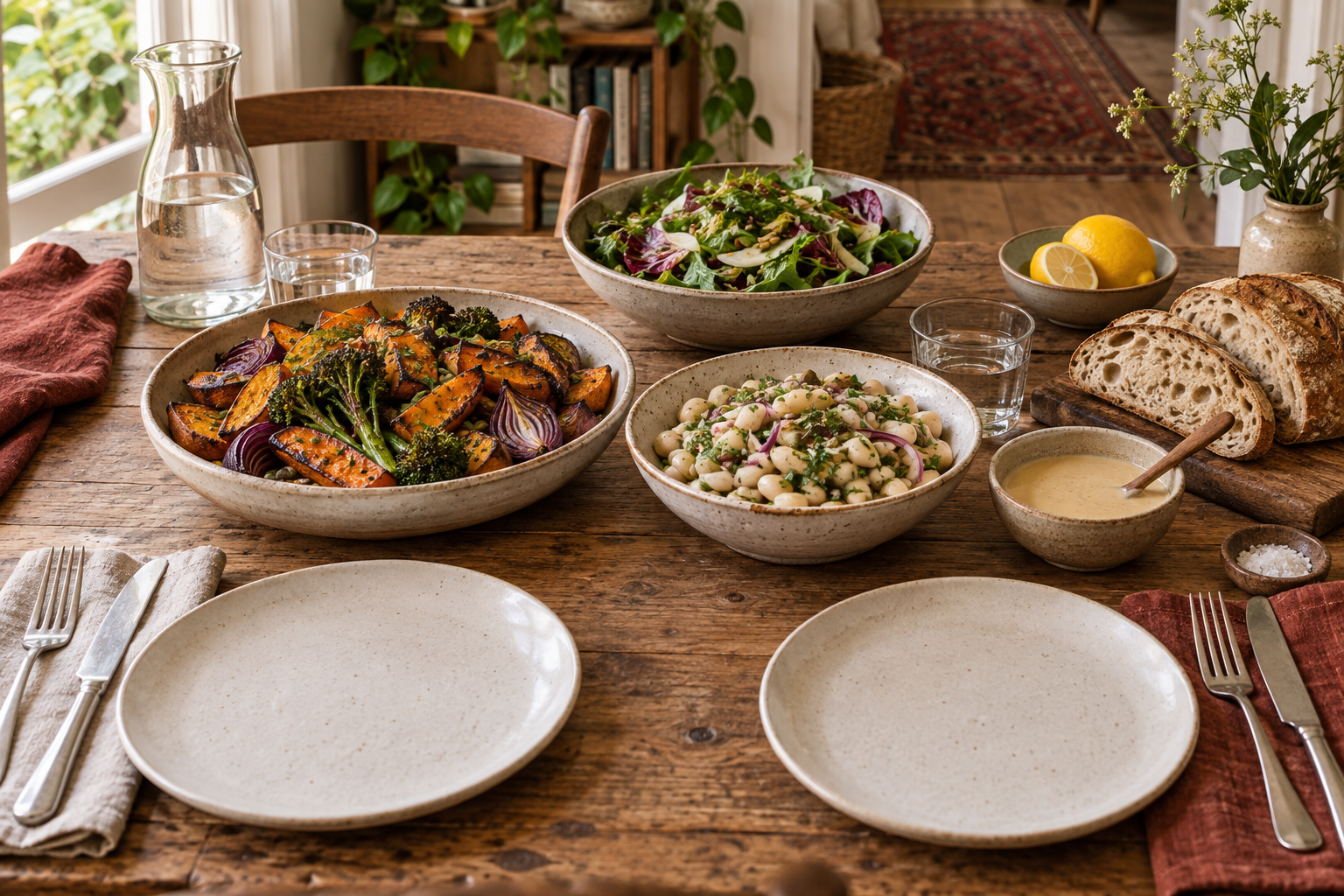
Cook a shared meal around common ground
Start with food people already enjoy, then check the details.
A soup supper is a complete invitation
One good pot, substantial bread, and a few clear choices can be enough.
Build a taco table with fewer bowls
Choose toppings that each contribute something different.
Ask about allergies before shopping
“Vegan” answers one question, not every ingredient question.
Let toppings do the negotiating
Keep heat, crunch, and extra sharpness available without building them into every portion.
Take a dish that travels well
Think about transport, temperature, and serving before choosing the recipe.
A small vegan brunch without a morning marathon
Combine one warm dish with things that are ready to serve.
Serve roasted vegetables with something soft
A bean spread or dressed grain can turn a tray into a meal.
A packed lunch needs a temperature plan
A plant-based filling can still be perishable.
Make the main dish before adding a second one
A substantial shared center is often more useful than several small side dishes.
Put the ingredient list where people can find it
Sauces and garnishes deserve the same clarity as the main dish.
Leftovers are easier when the containers are ready
Put food away promptly instead of waiting for the last conversation to end.
A picnic can be simpler than a dinner party
Choose food for the journey and the weather, not just the basket.
A potluck dish should explain itself
Include serving instructions if the food needs anything before eating.
A bowl night can welcome different appetites
Offer a base, a substantial topping, vegetables, and one sauce.
Keep one part of dinner familiar
A recognizable meal can make a new ingredient easier to try.
A quiet supper for one deserves a plate
Reduce the work without treating the meal as an afterthought.
The host does not need a speech about the menu
Tell people what is on the plate and let the food do its ordinary job.
A last-minute guest calls for a flexible addition
Add something that suits the meal without diluting its main flavor.
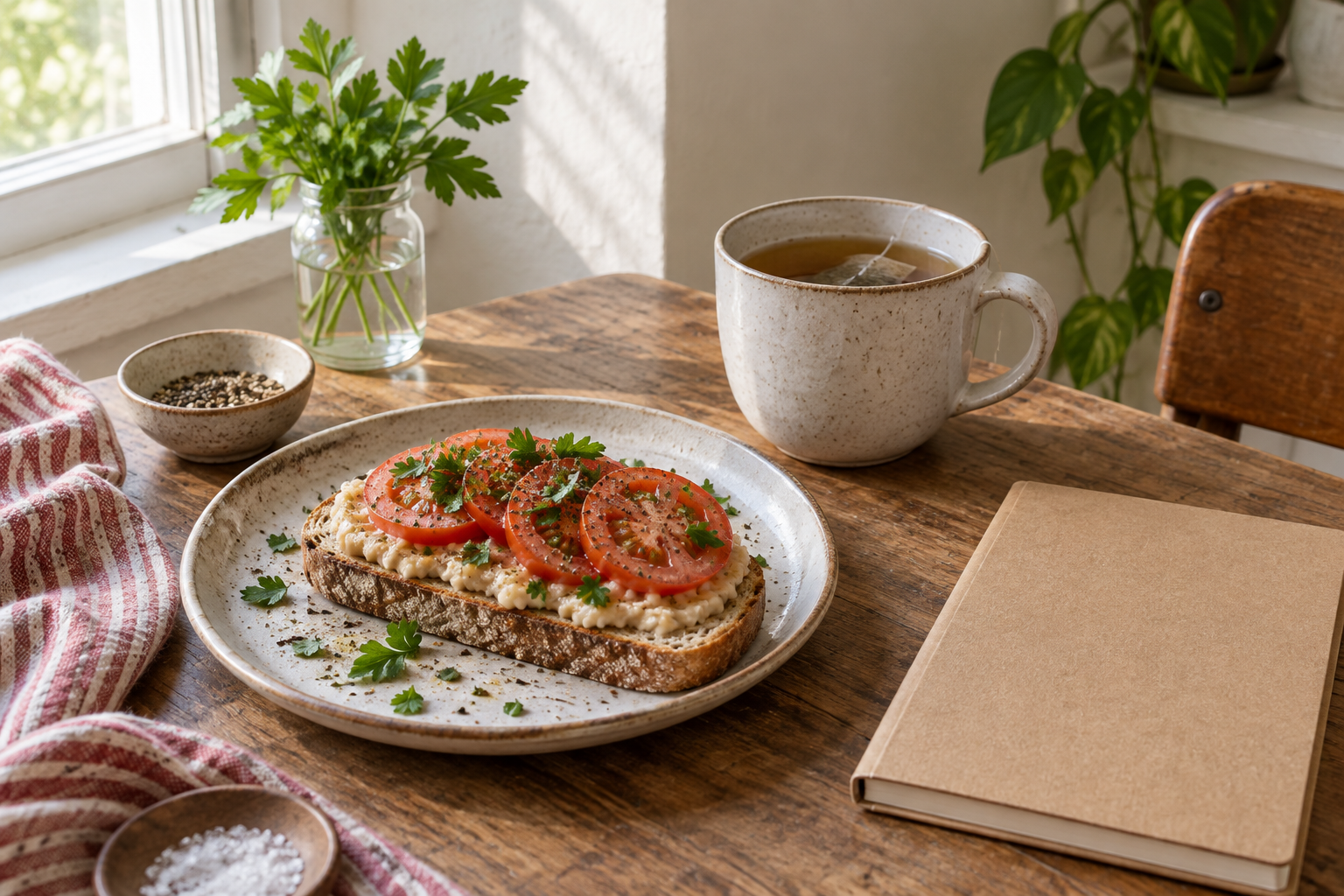
Start with one dinner you would happily repeat
Familiarity is useful when you are learning a new way to cook.
Begin with breakfast if that is the easy meal
Make one ordinary part of the day work before redesigning everything.
Shop for a meal, not a new identity
A short list can make the first week more comfortable.
You can use convenience food thoughtfully
Canned beans and frozen vegetables leave more time for the part you want to cook.
A disappointing tofu dish does not settle the matter
Texture and preparation can matter as much as the ingredient itself.
Learn two sauces before collecting ten
A sharp dressing and a creamy one can support several meals.
Build a meal with texture in mind
Soft, crisp, juicy, and chewy elements can make simple food more interesting.
Read “plant-based” as a prompt to check
Marketing words and full ingredient lists do different jobs.
Cooking for yourself and someone who eats differently
Agree on the practical details before the evening rush.
Keep the budget attached to actual meals
Compare usable portions and waste, not only the price on the shelf.
A week does not need seven new recipes
Repetition gives you room to notice what works.
Keep nutrition questions separate from recipe promises
A cooking notebook can help with dinner without pretending to plan a complete diet.
Start with the equipment already in the cupboard
A few suitable tools can do a great deal of ordinary cooking.
A meal that went wrong can leave one useful lesson
Name the problem precisely enough to change the next attempt.
Make room for food you simply enjoy
A plant-based kitchen can contain comfort, convenience, and ordinary preferences.