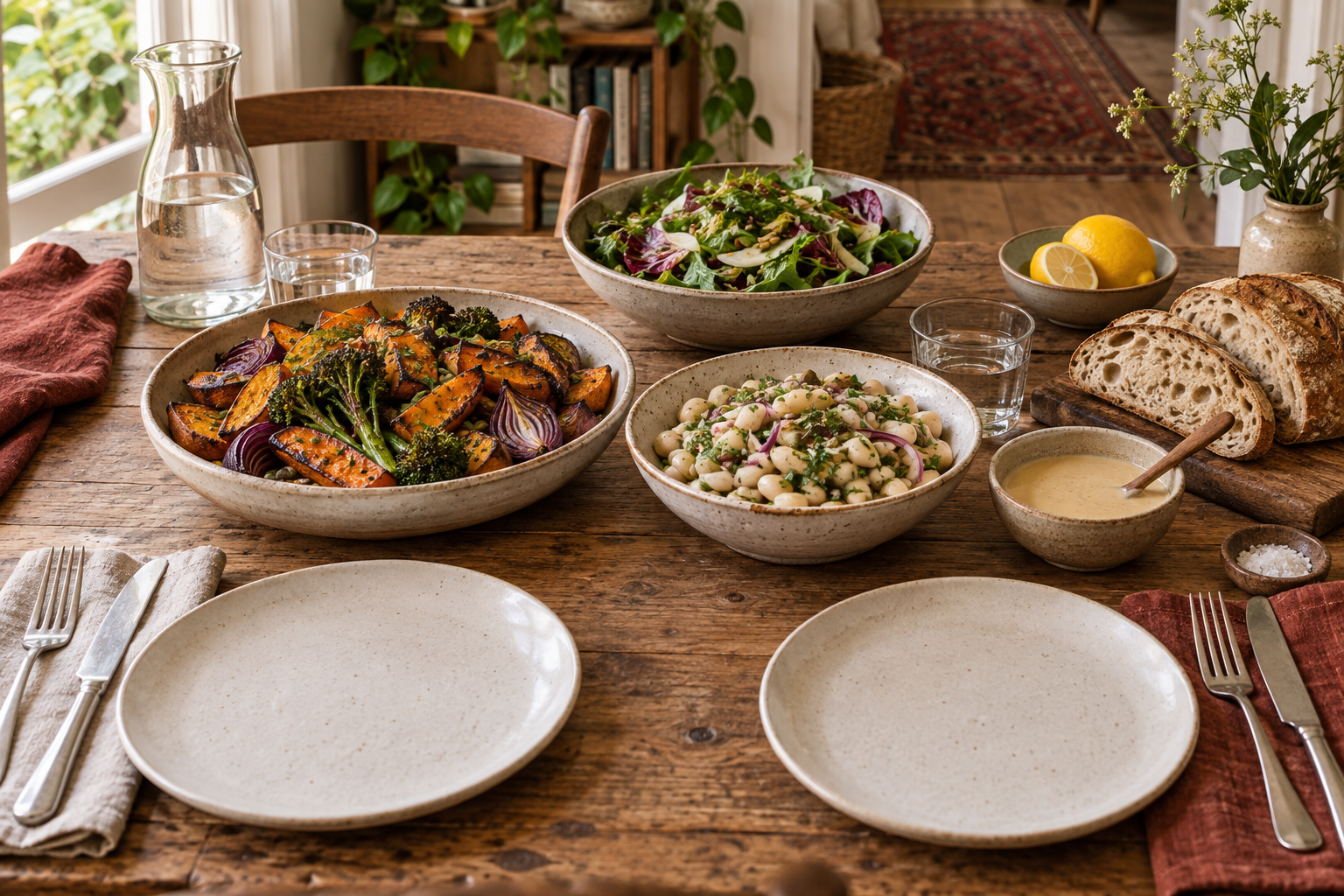
A mixed table is easier when the main dish sounds like dinner rather than a test of anybody's identity. Tomato beans, roasted vegetables, good bread, and a sharp salad give people familiar places to begin.
Ask about dietary needs before choosing the menu. Vegan food can still contain wheat, soy, sesame, nuts, and other ingredients that matter to a guest. Do not guess from somebody's usual order at a restaurant.
Choose a main dish that everyone can share if practical, and keep optional toppings separate. That reduces the number of parallel meals and makes it easier to keep serving utensils organized.
Describe the food plainly when it reaches the table. “Roasted carrots with lentils and lemon dressing” gives people more useful information than an announcement about what the dish is trying to replace.
Plan the plate before the shopping list
Picture what each person will actually eat. If the only substantial dish contains an ingredient one guest cannot have, several decorative sides do not solve the problem. Choose a main they can share, or agree on a proper alternative before shopping.
Then look at the work. A stew that can be prepared ahead leaves room for a fresh salad and conversation. Three dishes that all need last-minute frying may be a poor fit for a small stove, even if each is simple on its own.
There is no requirement to make every component unfamiliar. A favorite potato dish or a familiar salad gives the table continuity while one new bean or tofu dish supplies variety. Keep any claims modest: you are offering food people may enjoy, not proving that everyone ought to change the way they eat.