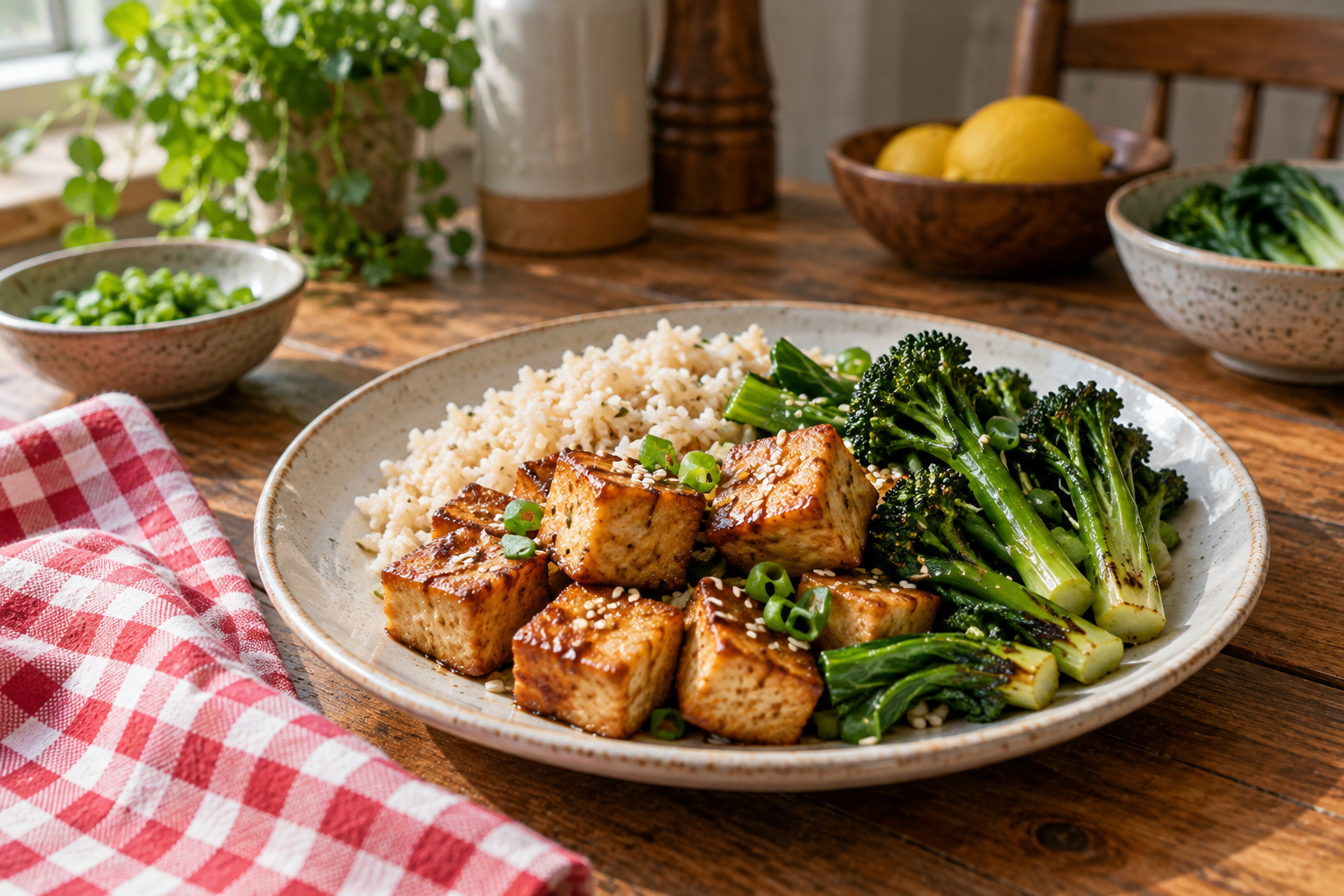
Tofu does not need to impersonate anything to make a good dinner. Its mild center is useful against a sharp, salty glaze, provided the glaze arrives after the surface has had time to brown.
Drain and pat dry a 280–300 g block of firm tofu. Cut into cubes and toss with a tablespoon of cornstarch. Heat a tablespoon of oil in a nonstick or well-seasoned frying pan. Cook the cubes in one layer, turning gently as the sides become golden. Crowding the pan makes this slower.
Mix one tablespoon soy sauce, one teaspoon maple syrup, one teaspoon rice vinegar, and two tablespoons water. Lower the heat, pour it around the tofu, and toss briefly until coated. Serve immediately with cooked rice and vegetables.
This is a surface treatment, not a long simmer. Leaving the cubes in sauce softens their crust. For wheat avoidance, choose a suitable labeled sauce; ordinary soy sauce often contains wheat.
Three things to look at when it sticks
- The surface: obvious moisture makes the first stage slower and can interfere with a light starch coating.
- The space: cubes pressed against each other are harder to turn and give moisture fewer ways to escape.
- The timing: a cube that resists lifting may need longer for its surface to set. Test one gently instead of scraping the entire pan.
Pan material changes the experience. A nonstick pan offers a forgiving starting point, while stainless steel asks for more attention to preheating and release. Use tools that suit the surface and avoid forcing stuck pieces with a sharp metal edge.
Prepare the rice and vegetables before the tofu reaches its final glaze. The crisp surface is at its best soon after cooking. If you need to hold dinner for a while, keep the sauce separate and combine only the portion you are about to serve. The result will still be tofu with a soft center; the goal is contrast, not dryness all the way through.